On Moralism
Antagonistic Contradictions and Non-Antagonistic Contradictions

‘How are we to live?’ This simple yet complex question has puzzled philosophers, ethicists, and theologians for millennia. The ancient Greek philosopher Aristotle wrote extensively on the subject, concluding that the goal of life is to live well and eudaimonia, a Greek word that’s often translated to happiness or “human flourishing.” He emphasized the practical importance of developing excellence (virtue) of character, as the way to achieve what is finally more important, excellent conduct. In Book II of the Nicomachean Ethics, he argued that the person who possesses character excellence will tend to do the right thing, at the right time, and in the right way.
This, of course, is one perspective. Over history, there have been many reactions to Aristotle's ethics. The Stoics and Epicureans rejected Aristotle’s view that external goods (wealth, health) were necessary for a good life, advocating for virtue alone as sufficient. Thomas Aquinas integrated Aristotle with Christian theology, agreeing broadly but emphasizing love and divine beatitude (heavenly union with God) as ultimate happiness, not just worldly flourishing. Immanuel Kant radically opposed Aristotle’s focus on eudaimonia and virtue, proposing a duty-based ethics centered on pure reason and universal law. For centuries, concepts like happiness have been debated: is it worldly flourishing or divine union? Is virtue purely rational, or does the will play a distinct role? Are wealth, health, and friends truly necessary for virtue? What appears to be a simple question reveals extraordinary complexity.
Many years later, the German philosopher Friedrich Nietzsche took up the mantle of ethics, turning back the clock and blaming Greek philosophers like Socrates, Plato, and Aristotle for the “decline” of pre-Socratic Greek culture, which became Western culture. He argued they overvalued reason and science at the expense of life-affirming instincts. Fundamentally, Nietzsche rejected Aristotle’s teleological view—the idea that humans have a natural telos (purpose) or final goal, such as happiness or eudaimonia. In Nietzsche’s view, overvaluing reason (a “Tyranny of Reason”) results in nihilism by systematically dismantling the instincts and irrational forces that make life worth living. When reason becomes the sole authority, it demands “objective truth” and “justification” for existence. Nietzsche argued that life is inherently chaotic and irrational (why do children get cancer?); thus, demanding it conform to logical categories eventually leads to the discovery that there is no “true world” or inherent purpose. By creating a rationalized “ideal world” (like Plato’s Forms or Aristotle’s telos), philosophers effectively devalued the real, material world. When modern science and reason eventually destroyed these metaphysical “fantasies", humanity was left with nothing but a world they had already been taught to view as “lesser” or “fallen.” Nihilism arises when the “highest values devalue themselves.” Because reason has proven that traditional moral and religious beliefs are baseless, people lose their commitment to struggle and creation. This, in Nietzsche’s view, results in the “Last Man,” who values only comfort and petty pleasure, having no purpose beyond biological survival. For Nietzsche, reason is a tool, but when it becomes the master, it acts as a “life-denying” force that eventually finds no answer to the question “Why?”—a literal definition of nihilism.
This was all famously captured by Nietzsche’s parable of the madman, in his 1882 work The Gay Science. The narrative begins with a “madman” who lights a lantern in the bright morning and runs into a marketplace. He cries out incessantly, “I seek God! I seek God!” The people in the marketplace—many of whom are atheists or non-believers—find him hilarious. They mock him, asking if God has gone on a voyage, gotten lost like a child, or is hiding from them. Suddenly, the madman jumps into their midst, piercing them with his eyes, and declares: “God is dead. God remains dead. And we have killed him.” He then asks a series of haunting questions to illustrate the gravity of what humanity has done: “How could we drink up the sea? Who gave us the sponge to wipe away the entire horizon? What were we doing when we unchained this earth from its sun?” In the aftermath, he realizes the crowd is astonished and silent. He admits, “I have come too soon",” noting that even though the deed is done, the news has not yet reached the ears of men. He later enters various churches to sing a “requiem mass” for God, calling them “the tombs and sepulchers of God.”
Nietzsche was quite the character. What’s this all about, anyway? Nietzsche was pointing out that modern science, reason, and secularism had made the idea of God “unbelievable” as an anchoring moral principle. By “we have killed him,” he meant that human advancement and the Enlightenment’s focus (rooted in Socratic, Platonic, and Aristotelian philosophy) on objective truth had dismantled the very foundation (the “sun”) that Western culture revolved around. Far from a triumphant celebration of atheism, the story is a warning. Nietzsche feared that without a transcendent source of value, humanity would spiral into nihilism and chaos. Sound familiar? He argued that because the “old sun” was gone, humans must now “become gods ourselves” simply to appear worthy of the deed—leading to his concepts of the Ubermensch and the revaluation of all values.
The Ubermensch and revaluation of all values is dangerous stuff. It has influenced horrific political programs and, unfortunately, the worst people seem to gravitate towards Nietzsche. I have always found Nietzsche profoundly life-affirming and optimistic. His point, of walking through how Western civilization necessarily results in nihilism, was not to confirm nothing matters. It was, instead, a call to action to make things matter. Nietzsche proposed Amor Fati (Latin for “love of fate”) as the ultimate antidote to nihilism. While nihilism concludes that life is meaningless because it lacks a grand purpose, Amor Fati demands that we affirm life not by finding a reason for it, but by loving it exactly as it is. In his work Ecco Homo, Nietzsche defined Amor Fati as his “formula for greatness.” It is characterized by: total acceptance (wanting nothing to be different—not in the past, the future, or all eternity); active affirmation (moving beyond merely “bearing” necessity or concealing it in idealism. Instead, one must love it); and becoming a “yes-sayer” (as he wrote in The Gay Science, the goal is to learn to see what is necessary in things as beautiful, thereby becoming one who “makes things beautiful.”)
Nietzsche used the thought experiment of the Eternal Recurrence to test one’s capacity for Amor Fati. He asks: If a demon told you that you had to live this exact life—every pain, joy, and sigh—over and over for eternity, would you fall to the ground in despair or would you welcome it as a divine revelation? If you can say “yes” to living your life again infinitely, you have achieved Amor Fati and overcome nihilism. Congratulations. What is this for? A central part of this proposal is the overcoming of “ressentiment”—the poisonous bitterness or blame directed towards fate, others, or the past. By loving one’s fate, an individual stops being a victim of their history and becomes its sovereign author.
This, of course, is a radically different answer to ‘how are we to live’ from where we began. My point? Matters of ethics and morality are complicated.
The story doesn’t end with Nietzsche. A few decades later, another German philosopher, Martin Heidegger, came along and added more complexity to the situation. He did not see Nietzsche as the “hero” who overcome nihilism, but rather as the “last metaphysician” (as he put it) who unintentionally brought the long decline of Western thought to its final, most extreme conclusion. His interpretation, delivered in a massive lecture series from 1936 to 1946, reframes the conversation in three major ways:
First, he saw Nietzsche as the “completion” of the problem. Heidegger argued that Nietzsche’s attempt to “revalue all values” stayed trapped in the very system he was trying to destroy. By replacing “God” with the “Will to Power,” Nietzsche was simply creating a new “highest value” to fill the void. Heidegger saw the “Will to Power” as the final stage of “Subjectivity”—where humans try to master and dominate the entire earth through their own will. For Heidegger, this is not an escape from nihilism, but the “ultimate entanglement” in it. Second, Heidegger reinterpreted the “Death of God.” For him, “God is dead” means the collapse of the entire “suprasensory world”—the realm of ideas, eternal truths, and fixed purposes that began with Plato and Aristotle. He believed the real problem wasn’t just the loss of God, but a deeper “forgetfulness of Being.” By focusing on “values” (which are human-made), Heidegger thought Nietzsche was still ignoring the most important question: “What is the meaning of Being itself?” Lastly, while Nietzsche saw Amor Fati as a heroic “Yes-Saying,” Heidegger critiqued it as another form of human self-assertion. He believed that trying to “stamp” our will onto time (through the Eternal Recurrence) was the height of hubris. Instead of Nietzsche’s “Will to Power,” Heidegger proposed a radical alternative called Gelassenheit—a “letting-be” or “releasement” toward things. He argued that we should stop trying to “value” and “master” the world and instead learn to open ourselves to the mystery of existence. Woo-woo, now we’re getting somewhere.
In short, Heidegger believed Nietzsche’s “solution” to nihilism was actually the final symptom of the disease. He felt that only a completely new way of thinking—one that moves beyond “willing” and “valuing”—could truly move us past the crisis.
Unlike the Western culture philosophers before him, Heidegger did not view knowledge or truth as a puzzle to be solved or a secret to “capture.” Instead, he focused on Aletheia (unconcealment) and Gelassenheit (releasement/letting-be). Understanding knowledge or truth as a series of “eureka” moments implies that the “I” (subject) has successfully grasped an “object.” Heidegger argued that truth isn’t something we get; it’s something that happens. He used the metaphor of a Lichtung (a forest clearing). Truth is the light that enters the clearing, but for that to happen, there must first be an open space. It is allowing the real nature of things to unconceal themselves. To allow for this open space, Heidegger proposed Gelassenheit, a state of active waiting. This is not passive; it is the strenuous work of keeping the space open without forcing a conclusion.
Heidegger was deeply worried about “Calculative Thinking”—the mindset that treats everything (including people and land) as a “standing reserve” to be optimized or a problem to be solved. Calculative thinking loves eureka moments because they are efficient. They provide a quick fix. Instead, he called for “Meditative Thinking,” which stays with the “mystery” of a thing. He believed that the real “Turn” (Die Kehre)—the shift in history we need—won’t come from a brilliant new invention (a eureka) but from a change in how we dwell in the world. To this point, Heidegger noted that being in this “open space” causes Anxiety (Angst). Unlike fear, which has a specific object, anxiety is the feeling of being in the “nothingness” of the clearing. This is the seeming impulse by many people to demand a “straight answer.” They are fleeing the anxiety of the open space.
This is all getting very fuzzy. That is Heidegger’s point, however. Life and reality are complex. He intentionally uses poetic language to describe things we usually treat as technical problems. This is a radical reconsideration of concepts and practices we undertake daily.
Heidegger warned that reason and technology “enframes” the world to make it more manageable. In his 1954 essay The Question Concerning Technology, Heidegger introduced this concept of “enframing” (Ge-stell) to describe the “essence” of the modern age. The “essence” of technology is not technological; it is not about machines or software, but about a specific way of seeing the world that demands total efficiency and control. It is a worldview that looks at everything as a problem to be solved with the most efficient technical solution. Importantly, it defines how the modern world “looks” to us, making it difficult to see things in any other way. A river is no longer seen as a “flowing body of water” but as a potential source of hydroelectric power. A forest is no longer an ecosystem; it is a “timber reserve” or a “carbon sink.” Most alarmingly, Heidegger warned that humans also become standing-reserve—redefined as “human resources” or “human capital” to be optimized for productivity.
Heidegger argued that enframing is the ultimate danger because it conceals all other ways of being. When everything is treated as a quantifiable resource, we lose the ability to experience the world with wonder, art, or sacredness. It results in species-level narcissism, where humanity begins to believe it is the “lord of the earth” and has total control, leading to a delusion where we only see our own reflections and needs wherever we look. Lastly, because we are so focused on “calculative thinking” (measuring and manipulating), we become blind to “meditative thinking” (contemplating the meaning of existence). Despite his dark diagnosis, Heidegger believed that within this danger lies a “saving power.” He proposed that by questioning the essence of technology and acknowledging how it limits our view, we can regain a “free relationship” to it. He suggested turning back to art (originally techne), which allows things to “reveal” themselves in their own time and beauty, rather than forcing them into a frame of utility. Continuing on my previous blog post, it is the negative capability to see the enframing for what it is.
This enframing is all around us—not only in our physical interactions with our surroundings, but in our psychology and relationships. Take, for example, the critics of Rock Island’s Social Services Licensing Ordinance: social service providers and their supporters are using a victim narrative to enframe the ordinance as an “attack on the poor” or “harassment of the helpers.” Their mission is noble, which creates a powerful narrative: “we are the good actors.” When presented with the material reality of neighborhood saturation (effects on property values, safety, privacy), they interpret it as an attack on their “goodness.” Instead of engaging with the valid points of proponents of the Social Services Licensing Ordinance, they retreat into a victim narrative. They claim to be “persecuted” by the City. This is a strategic way to close the clearing. If they are the victims, they don’t have to be neighbors; they don’t have to negotiate; they just have to survive the “oppression.”
I use the language of “oppression” intentionally, as it is ubiquitous within my political community of socialism. I think this is a serious problem and is not in alignment with our Marxist tradition. I posit there is a difference between Democratic Socialism as a dialectical practice and Socialism as a moralistic identity (or dogma). I consider myself a practitioner of the former and reject the latter. When Socialist circles use “Oppressor vs. Oppressed” as a rigid, universal template, they are—ironically—using a tool of enframing that Heidegger would argue is indistinguishable from the logic of capitalism they seek to overthrow. In this “enframed” version of Socialism, individuals are no longer “neighbors” or “citizens;” they are categorized into a Standing Reserve of Political Identity. Once you enframe someone as an “Oppressor” (because they are a landlord, a business owner, or even a City official), you stop seeing them as a person capable of change or synthesis. They become a resource to be defeated, managed, or “liquidated” from the conversation. This closes the clearing. It prevents the very unconcealment of truth that people like Karl Marx were after. If you already know who the villain is before the meeting starts, you aren’t doing the work of the dialectic; you are performing a ritual.
Marx’s original analysis of class was structural, not moralistic. He was looking at how systems force people into certain roles. Democratic Socialism as a dialectical practice looks at the system (the City, social service providers, businesses, residents) and realizes that everyone is caught in a contradiction. The goal is to sublate the system to a higher level of fairness. Moralistic Socialism focuses on certainty. It demands a victim/villain narrative because that narrative provides an immediate sense of righteousness. This version of socialism is reaching for a moral high ground rather than doing the hard work of material synthesis.
In many ways, the dialectical Democratic Socialism I’m describing is the antithesis to enframing. It demands pluralism, which recognizes that the “multitude” contains diverse perspectives that cannot be flattened into a single narrative. It requires deliberation, which means we must listen to multiple perspectives (even from people labeled as “oppressors”) and find the truth within them. Lastly, it calls us to experiment; it forces us to test our theories against reality, which is praxis.
I cannot stress enough how people like Marx or Lenin wrote scathingly about confusing dialecticism for moralism. Marx argued that moralism is a “cheap” way to engage with the world. In his polemics (like The Poverty of Philosophy), he attacked thinkers like Proudhon for treating economic categories as “good” or “evil” rather than contradictions in a historical process. If you simply label a factory owner “evil,” you’ve explained nothing. You’ve just affirmed your own righteousness. Instead, you must understand the systemic forces that make the factory owner behave as they do. To Marx, moralizing was a “pre-scientific” way of thinking that actually slowed down revolution because it replaced analysis with indignation. As I’ve written about previously, Lenin, though often associated with rigid discipline, was a ruthless pragmatist when it come to the dialectic. In “Left-Wing” Communism: An Infantile Disorder, he attacked those who refused to compromise or engage with “impure” institutions (like parliaments or trade unions) based on moral purity. He called this “Left-doctrinairism.” He saw it as a psychological failure—a desire to keep one’s hands clean rather than achieve material results. For Lenin, a leader who refuses to acknowledge the “valid points” of an opponent (like social service providers refusing to see the neighborhood’s saturation) isn’t being a “good socialist;” they are being a “child” who is afraid of the “messiness” of reality.
Why does this happen? Marx and Lenin both suggested that moralism is the ideology of the petite bourgeoisie. This class is more recently referred to as the Professional-Managerial Class (PMC). Because this class feels powerless between the “big” forces of Capital and Labor, they retreat into “moral superiority” as their only source of power. I’ve written about this class previously. This is exactly what we’re seeing: social service providers and their supporters—all middle-class professionals—refusing to use material analysis. They are using Moral Enframing.
Don’t believe me? In the Manifesto of the Communist Party (Section III), Marx and Engels attack “True Socialism” (a movement of German intellectuals at the time). They argued that these thinkers replaced the material struggle of classes with the “interests of Human Nature” and “Man in general.” Marx argued that by focusing on “the human heart” instead of “the factory floor,” these petite-bourgeois intellectuals were essentially trying to “enframe” the revolution to fit their own psychological comfort. He mocked the idea that socialism was about “universal love” or “moral righteousness,” calling it a “foul and enervating” sentimentality that distracted from the hard, dialectical work of structural change. Similarly, Lenin was particularly brutal toward the Social-Revolutionaries (SRs) in Russia, a party he viewed as the quintessential petite-bourgeois movement. In his 1902 work What Is to Be Done?, he attacked their “freedom of criticism” and their reliance on moral sentiment. He argued that the petite-bourgeois intellectual loves “vague phrasemongering” about “Freedom” and “Humanity” because it allows them to feel like a “heroic victim” without actually committing to a disciplined, materialist strategy. Lenin noted that whenever these groups were challenged on their lack of scientific analysis, they immediately retreated into moral indignation. They treated a political critique as a personal “insult” to their “goodness.” In his famous speech, The Task of the Youth Leagues (1920), Lenin addressed the question of “Communist Morality” directly. He stated:
“We say that our morality is entirely subordinated to the interests of the proletariat’s class struggle… We do not believe in an eternal morality.”
Lenin argued that any morality derived from “God” or “Abstract Ideas” (human rights) was a “fraud” designed to keep people from looking at the dialectic. Sounds pretty Nietzschean. I suspect, if Lenin were here to day, he would deem social service providers’ “victim narrative” as a form of clericalism—using a “holy” mission to protect their own institutional power.
Marx and Lenin both suggested that the petite bourgeoisie is the class most prone to narcissism. Because they are constantly afraid of falling into the working class or being crushed by the big capitalists, they develop a “fragile ego” that requires constant moral validation. They don’t see themselves as part of a collective process; they see themselves as “the individual doing good.” When the City of Rock Island challenges them, we aren’t just challenging a particular public policy; we are challenging their identity as “good people.” Their only defense is to enframe us as the “oppressor” to preserve their own moral standing.
This is a massive internal conflict within modern Western socialism. The “moralization” of politics—exemplified by the impulse to expel members for “purity” violations rather than engage in strategic dialectics—can be understood as a collision between identity-driven digital culture and the precarious class position of the modern activist. Here is why moralism has become the dominant flavor of socialism in America today:
A significant portion of the modern socialist base (including many in DSA) works in the PMC—non-profits, academia, and social services. As Marx and Lenin noted, this class finds power not through labor strikes, but through moral authority. The result: politics becomes a HR department exercise. Instead of building a “mass movement” (which is messy and requires sitting with the Negative Capability of people who disagree with you), the focus shifts to policing the boundaries of the group. Secondly, as I’ve written about, in the age of social media, one’s “socialist identity” is a brand. Digital culture works to close the gap between your ideas and your identity. Lastly, when the path to actual power feels blocked or impossible, people often retreat into symbolic politics.
The core of the problem is the death of the synthesizing impulse. The moralist says: “This person did X, therefore they are a traitor. There is no contradiction to resolve, only a person to remove.” The Dialectic Socialist says: “This person did X. That creates a contradiction between our goals and their actions. How do we sublate this? How do we use this friction to build a more disciplined and effective movement?”
I have a unique perspective: I am an elected official. In my eight years serving on Rock Island’s City Council, I’ve come to understand government as simply the management of contradictions. This is important.
In many ways, the idea that governing is the “management of contradictions” is the most fundamental lesson of Materialist Dialectics. Both Marx and Lenin believed this, but they approached it from two different angles: Marx from the theoretical/historical side, and Lenin from the practical/state side. For them, a contradiction (a tension between two opposing forces) isn’t a problem to be “solved” once and for all; it is the very engine of reality.
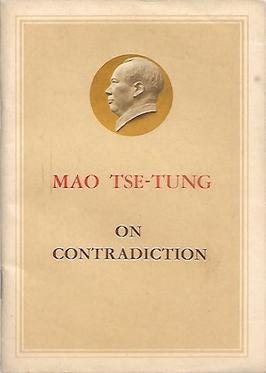
Marx famously stated in the Manifesto that the executive of the modern state is “but a committee for managing the common affairs of the whole bourgeoisie.” He didn’t mean they were all friends. He meant that different factions of the ruling class (industrialists vs. bankers vs. landlords) are constantly in conflict. The state’s job is to prevent these internal contradictions from tearing the system apart. Lenin’s most profound philosophical work, Philosophical Notebooks, focused heavily on the Unity of Opposites. He argued that you cannot understand any social situation without identifying its internal contradictions. However, it was Mao Zedong who wrote the definitive text on this subject. He distinguished between Antagonistic Contradictions, like Labor vs. Capital which can only be resolved by the destruction of one side, and Non-Antagonistic Contradictions, like cities versus rural areas. Mao argued that the art of governing is correctly identifying which is which. If one treats a Non-Antagonistic Contradiction as an antagonistic war (as the moralists do), you destroy the community. If you treat it as a contradiction to be managed through synthesis, you build a stronger community.
It is worthwhile to spend some time understanding these distinctions. Marxists argue that some contradictions are “accidental” or “non-antagonistic”—like the tension between two different types of industry. These can be managed through synthesis without anyone being destroyed. However, the contradiction between Labor and Capital is seen as essential and antagonistic. This is because their interests are mutually exclusive at the root level. For Capital to grow, it must extract surplus value from Labor. For Labor to be fully “free” (as Marxists define it), it must end that extraction. We can manage this tension for a century (through the Welfare State, unions, or regulations), but you haven’t “resolved” the contradiction. You have only postponed the crisis.
Marxists concluded that a system cannot “manage” its core contradictions forever because the tension eventually becomes too great for the “Committee” (the State) to hold. It eventually leads to a qualitative leap. Think of it like heating water: you can manage the temperature from 1 degree Celsius to 99, but at 100 degrees, the water must become steam. You can’t “manage” water into staying water at that temperature. To Marxists, “Revolution” is that 100 degree moment where the management fails and one side must sublate the other. Importantly, when Marxists speak of the “destruction” of Capital, they don’t necessarily mean the destruction of the people (though historically it has often turned into that). In theory, it means the destruction of the category. When the proletariat “wins,” it doesn’t just become the new boss. It destroys the relationship of Capital/Labor.
The question of when the water hits 100 degrees—when the material conditions allow for the leap—is the central problem of revolutionary theory. It is not a specific date on the calendar, but the alignment of three material factors: the ruling class can no longer rule, meaning the internal contradictions between different factions of capital become so antagonistic that the legal and political systems freeze; second, the working class can no longer live in the old way—it is a material state where the old way of life has physically collapsed for the majority; and lastly, the presence of a disciplined, organized body (unions, councils, parties) that can survive the chaos of the leap and offer a new synthesis exists. Without all three, you don’t get a leap; you get a “morbid symptom” (like a riot or a fascist surge) where the old is dying but noting new can be born.
It occurs to me that many socialists attempt to will a revolution into being through moral outrage. In the 1960s, the philosopher Theodor Adorno engaged in a famous debate on this issue. Adorno argued that when activists use “moral outrage” to bypass the slow work of building material conditions, they are practicing “Actionism.” Actionism is a defense mechanism. Because organizing a neighborhood or factory is slow, boring, and full of doubt, people turn to moral outrage. Outrage is fast. It provides immediate certainty. In that debate, Adorno told a student activist that their desire to “do something now” was like a media scholar deciding to become a radio technician because they were tired of studying how communication works. They were abandoning the theory (understanding the system) for a false praxis (a shortcut to feeling useful).
My critics and opponents to Rock Island’s Social Services Licensing Ordinance are reaching for a moral narrative to bypass the material complexity at hand. There is a difference between outrage and organization. Outrage is a discharge of energy. It feels good for the individual but leaves the structure untouched. Organization is the storage of energy. It is the ability to hold a contradiction in place until the material conditions allow for a move. History suggests that revolutionary change happens when others have exhausted themselves and the people look for someone who has the stamina of the waiting. In a crisis, people eventually stop looking for the person with the loudest moral outrage and start looking for the person who didn’t blink when the old narrative fell apart. I continue to understand my role by holding my ward in a “stable waiting,” preparing the ground for an eventual synthesis.
A perfect Socialist example of this is former British Prime Minister Clement Attlee and the rise of the 1945 Labour Government after World War II. Leading up to the 1940s, the British left was defined by firebrands like Nye Bevan, often locked in moralistic enframing that polarized the party and alienated the working-class people who were more concerned with bread-and-butter survival. Attlee was famously underestimated. Churchill once called him a “sheep in sheep’s clothing,” but Attlee practiced a form of political negative capability. He didn’t try to out-shout the moralists, he performed what he called “the long game.” He sat with the contradictions of a war-torn empire and a radicalizing working class. He held the clearing while others exhausted themselves in infighting and grandstanding. Because Attlee had the stamina to wait, he was able to deliver the most radical “leap” in British history: the National Health Service. He didn’t expel his critics or moralize against the doctors who opposed him. He managed the contradiction by bringing them into the process until the synthesis became a material reality. It wasn’t born out of moral outrage; it was born of a disciplined, patient organization.
Democracy acknowledges contradictions. Socialism aims to sublate the contradictions within capitalism. This is the “final frontier” of Marxist (and Heideggerian) thought. If we believe Socialism eventually resolves the central contradictions of capitalism (Labor vs Capital), it raises a curious question: does history stop? And if there is no more conflict, does democracy become a useless relic?
The answer, according to many dialectical thinkers, is no. The goal of Socialism is not to create a world without contradictions, but to move from antagonistic contradictions to non-antagonistic ones.
This is where we find ourselves in Rock Island, though I don’t mean to suggest we’ve sublated capitalism here. With respect to the matter of social service provision in Rock Island, we have a non-antagonistic contradiction. My critics and opponents to the ordinance are making a category error—it is a move I believe both Marx and Heidegger would find deeply dangerous to the health of our community. By enframing the situation in our downtown as an antagonistic contradiction, my critics are claiming that there is no possible synthesis that benefits both the neighbors and service providers (and their clientele). They are asserting this is a zero sum, “win-lose” class war. In doing so, they use moralistic enframing to turn a manageable neighborhood tension into an irreconcilable battle between “The Good” (providers) and “the oppressors” (the City).
In Marxist theory, an antagonistic contradiction exists because of essential property relations (e.g., the owner owns the machine, the worker owns only their labor). The reality is, the essential property relations with respect to social service providers, their clientele, their neighbors, and the city is anything but exclusive. Social service providers have an interdependent relationship with entities likes municipal governments and neighbors. How do people get to their facilities without municipal infrastructure (sidewalks, streets)? Who do they call when a client exhibits anti-social or dangerous behavior (911)? How are their services paid for (taxes, collected/distributed by the city and paid for by neighboring businesses and residents). In many, many ways, social service providers are dependent and interdependent with the very entities with whom they are in conflict. This is not an antagonistic contradiction. This is a conflict that can be managed—that is being managed.
In a non-antagonistic contradiction, the goal is synthesis. Synthesis requires the difficult work of listening, compromising, and “dwelling” in the mess. By introducing “Good vs. Evil” language, our critics effectively cancel the possibility of synthesis. If the City is “evil,” then a compromise isn’t a solution—it’s a “collaboration with the enemy.” Moralism is the tool used to “harden” a soft contradiction. It turns a flexible tension into a rigid wall. It is the wrong application to our current circumstance.
Don’t fall for it.
In an oddly ironic way, it feels like this lecture reframes the moral debate regarding the Rock Island Ordinance in a way that makes you the victim of oppressive moral policies. But really its about zoning isn't it? requiring 1000 feet between a homeless shelter and a city park or a school must profoundly limit where they can locate these facilities doesn't it. I mean thats about 5 blocks. Nobody wants the homeless living around them --- we have the same problem in my town and they have effectively zoned them out of much of the town for possible options. I can see how people who identify themselves as progressives or socialists etc. would be upset with the government presenting this regulatory action as a good thing since regulation has tended to benefit the haves and not the have nots. I have always felt that the ad hominin fallacy requires a provision acknowledging that the character of the thinker does bring in doubt the credibility of the philosophy --- especially so when the philosophy involves existential proclamations. This has been my biggest criticism of Heidegger -- that his philosophy has a malodorous odor related to his own existential choices.